
Key takeaway
A live capture saves both sound and visuals of your concert or performance on location, layering pro microphones plus multicamera coverage when needed. Rooted in Paris as a cultural nonprofit, Gniark Gniark lines up technicians, control surface and downstream media workflows so feeds stay redundant, reels stay clean and your team can repurpose everything after the gig.
Introduction
What is a live capture?
Live capture immortalizes stage energy with unpredictable gain rides and audience feedback. It blends camera coverage (often multicam), dedicated audio (stage mics, console feeds when possible), monitoring and post-show deliverables (edit-ready files or social exports). Acting as associative producer, we connect roster artists with field crews so show night never slips into improvised guesswork.
Which events deserve this workflow?
What technical backbone should we expect?
Expect stabilized cameras paired with optics that tolerate tungsten washes, multicam choreography agreed with whoever runs backline, microphones plus portable multitracks when multiple stems matter, and monitored encoding if streaming piggybacks the record. Complexity scales with timelines and deliverables—we never insist on redundant camera chains when you only require a teaser cut from capture night.
How should we rehearse logistics?
What happens to video after encore?
Recommended images
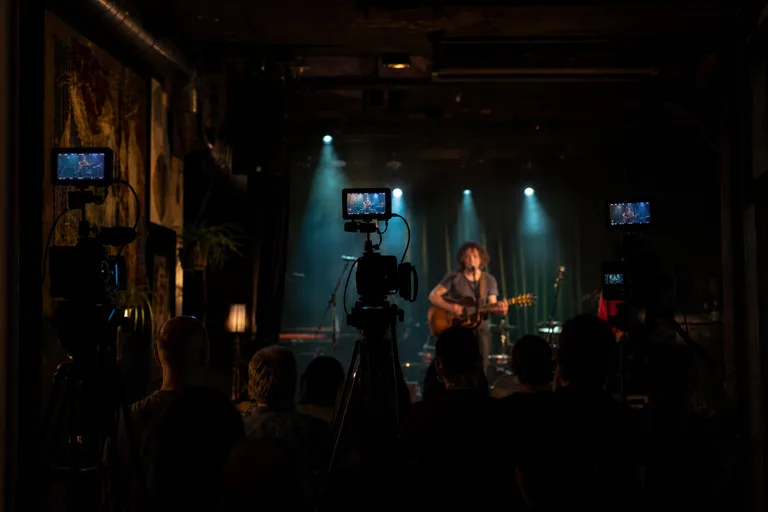
Multicamera gig capture night in Paris for Gniark Gniark 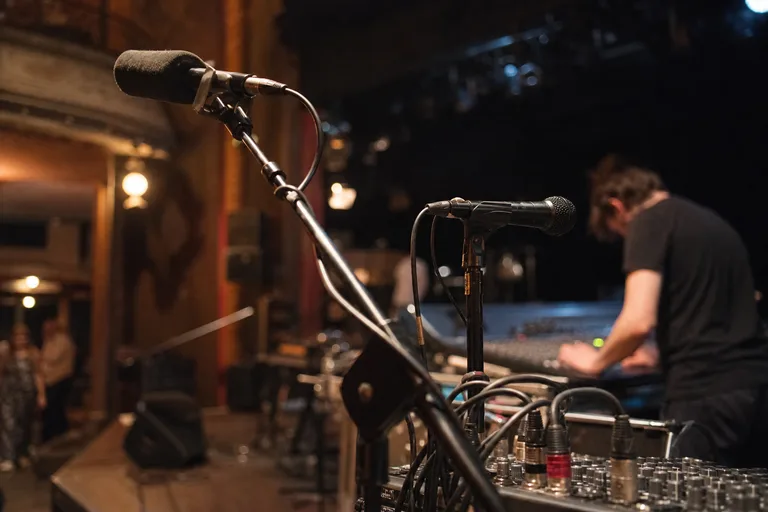
Stage microphones routed for Paris live captures 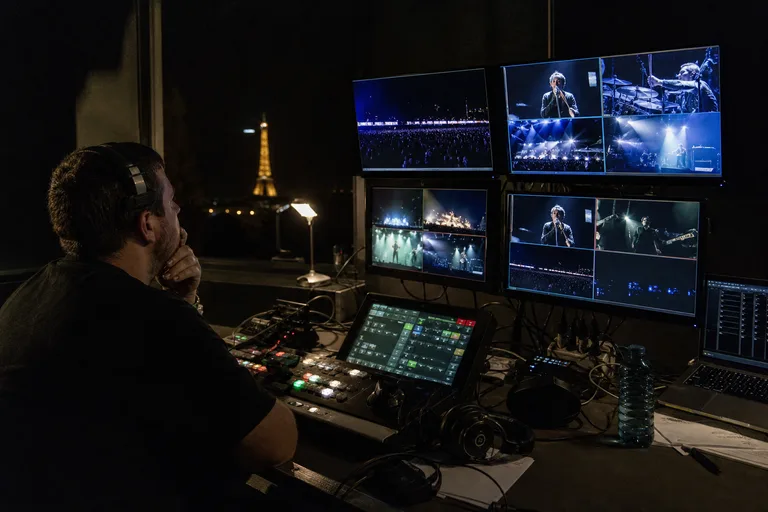
Video village monitoring a Paris concert multicam gig 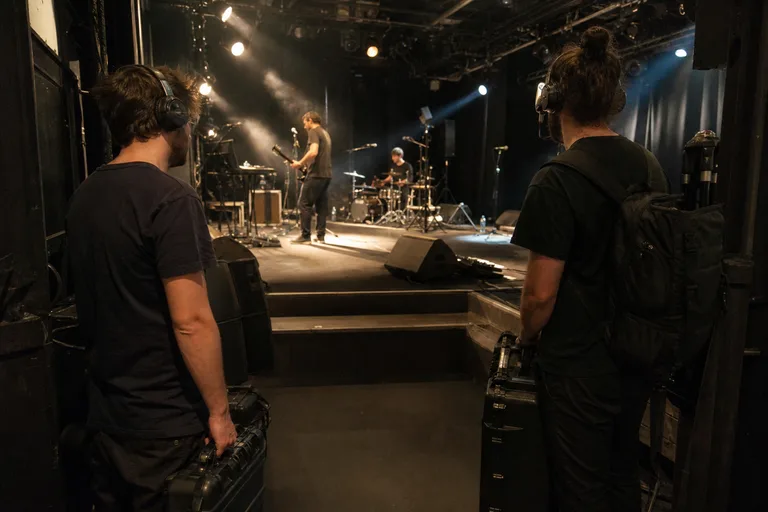
Gniark Gniark nonprofit crew capturing concert footage in Paris
FAQ
- Can a multicam gig replace a controlled clip shoot?
- No—multicam gigs prize audience electricity while studios choreograph sterile lighting beats. Concert capture still fuels social bumpers if you blueprint shot lists before stepping onstage.
- How many cameras for a cramped Paris gig room?
- Three angles—wide architectural, kinetic side-follow, tighter hero shots—normally carry enough storytelling without overcrowding cramped Paris rooms. Venue depth, grid clearance and spectator lanes adjust the tally.
- Can we stream publicly and ISO-record the same evening?
- Yes when encoders respect bitrate budgets, buffering and monitor mixes mirrored for both stems. Operators debrief failover paths ahead of doors so neither feed clips mid-chorus.
- Should venues unlock specific capture permissions?
- Each hall clarifies tripod boxes, cabling runs and SPL monitoring; technical producers align with hospitality before ticket scan so camera pods never block egress.
- What lead time helps Paris cultural halls?
- Expect several weeks minimum to align nonprofit staffing, freight and artist calendars; complex multicam/stream shows need earlier freezes so insurers and venue tech sign off concurrently.
- Do you hand off social-ready files?
- Yes—we can bundle vertical trims, subdued captioning and short/long masters mapped to whichever channels artists legitimately cleared: YouTube, Instagram, association sites, newsletters.
Conclusion
Meaningful capture night Paris hinges on marrying artistic intent with hall logistics and clarified deliverables—the nonprofit anchors artists, crews and organizers around that loop.
Send date, room, runtime and redistribution goals—we answer with calibrated staffing, multicam/audio depth and associative next steps geared to your wider live storytelling cluster.