
At a glance
An artist residency gives you a framework, time and support to shape a creative project. In Paris Gniark Gniark hosts emerging artists and collectives over several days or weeks to advance a tangible outcome—a music video, live session or release content—with clear milestones between workshop, planned capture and the pathway described in our <production>artistic production in Paris</production> cluster.
Introduction
Why does this matter?
Independent artists and collectives often lack uninterrupted stretches to iterate: fragmented schedules and studio costs keep projects at the idea stage. A Paris artist residency adds structure—rehearsal, trials, targeted capture—and a nonprofit counterpart to keep deliverables realistic. Without that framing, shipping a clip or live session slips or turns into unusable rushes.
What is the concrete answer?
What steps should you follow?
State the artistic need and audience
Write down medium, intended duration, who performs or shoots, and what audiences should see at launch (clip, teaser, live session, release date). The clearer the target, the more reliable the residency calendar.
Check technical feasibility and slots
List minimal audio needs, whether cameras are required, and volume or time-of-day constraints. A nonprofit residency aligns with volunteers and available space—being honest about available time prevents mid-residency stalls.
Structure the project with the nonprofit
Use the artist mentoring notes to prepare a readable dossier: milestones by day or week, roles, and how capture or a release fits in.
Prepare deliverables and distribution
Lock target formats (social lengths, horizontal vs vertical master, demos) and connect them to the resources described on artistic production in Paris.
Apply and propose a residency
Send everything through the contact page—we answer with feasibility, possible slots or alternatives, then a residency proposal aligned with the collective.
What pitfalls should you avoid?
- Arriving with a vague brief (“we’ll see on site”) and no deliverable or release goal—the residency dissolves.
- Confusing a creation residency with a three-week closed-door album sprint without shared nonprofit scheduling.
- Underestimating stage or capture time inside the stay while only budgeting bedroom creation time.
- Ignoring roles inside a crew—without a split, workshop and rehearsal sessions spin.
- Not tying takes to planned cut-downs (teasers, live-session extract, making-of)—you pile files without a release story.
How can Gniark Gniark help?
Gniark Gniark is a cultural nonprofit in Paris. It supports emerging artists, musicians, videographers and collectives along a cooperative chain—creation time, capture when relevant and continuity toward usable media.
Concrete situation examples
- Emerging crew: one week to finish a filmed live session plus two short cut-downs for an EP drop—rotation of rehearsal, light lighting prep and guided capture.
- Solo artist: five-day clip residency—recce, staging workshop, condensed shoot and neatly handed-off files for post with the same roadmap as the release campaign.
- Music-and-image project: ten-day creation residency with process documentation (making-of) for partners and fundraising without losing clip-grade takes.
- Ahead of a live show: short residency focused on rehearsal and capture of a pilot set to validate the performance and feed promo for the date.
Recommended images
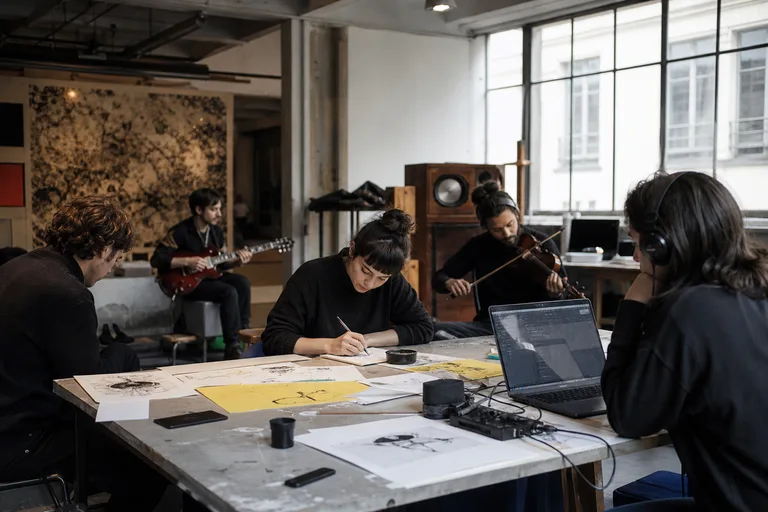
Creation workshop during an artist residency in Paris with Gniark Gniark 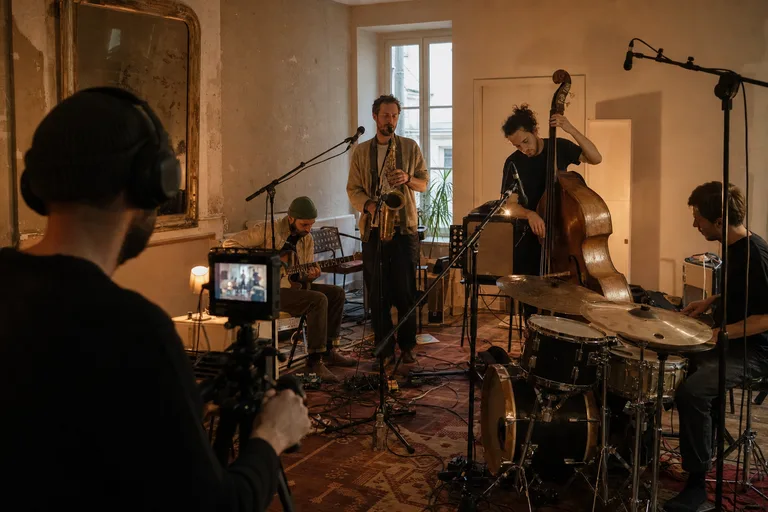
Filmed live session during a nonprofit creation residency in Paris 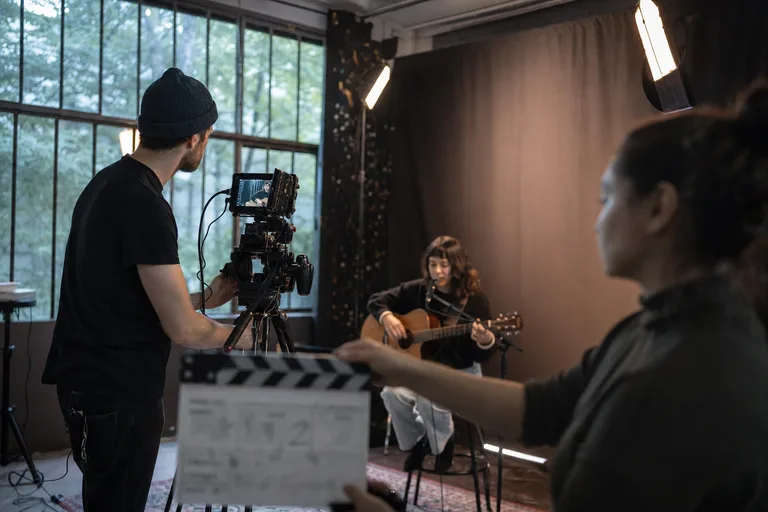
Music-video behind-the-scenes during a Paris artist residency with Gniark Gniark 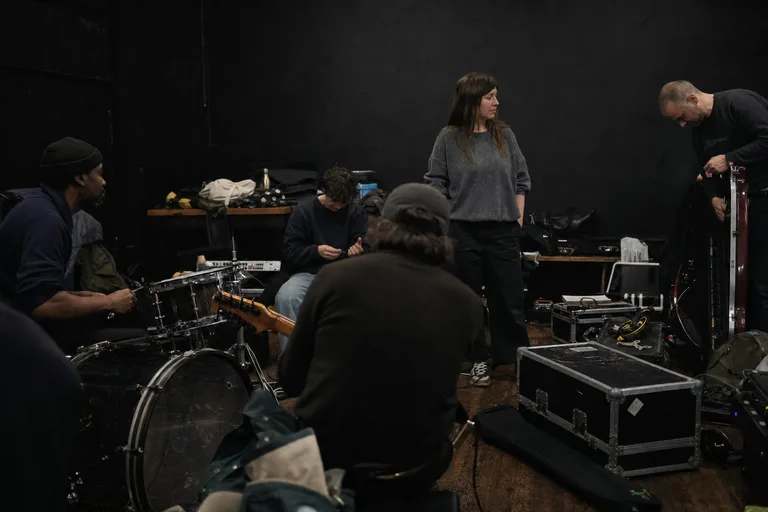
Artist collective in residency at Gniark Gniark nonprofit Paris
FAQ
- What is an artist residency?
- An artist residency gives a framework, time and support to structure a creative project: workshop, rehearsals, targeted capture sessions and milestones without reducing everything to one high-pressure shoot day. At Gniark Gniark in Paris this happens in a nonprofit model oriented to concrete deliverables—a music video, live session or release content.
- Which projects can you bring?
- We steer emerging artists and collectives toward realistic residencies: clip residency, music or creation residency, filmed live session, release-cycle content, process documentation or set prep. Feasibility depends on calendar, spaces and cooperative working methods.
- How does a residency run?
- After reading your dossier we define a sequence over several days or weeks: goals per phase, workshop or stage slots, pilot capture days and coordination points with the volunteer team. Each phase stays documented so deliverables stay on track.
- What deliverables should you aim for?
- Depending on intent: short masters or rough cuts for social, neatly organised rushes for post, live-session extracts, audio demos or partner-facing making-of. The point is to connect these outputs with a legible release for your audience.
- How do you apply?
- Use the contact page with a structured note—medium, intended duration, people involved, minimal technical needs and what you want to show at the end of the stay. We answer with feasibility, possible slots or alternatives, then a residency proposal aligned with the collective.
- Can you combine rehearsal, capture and creative workshop?
- Yes—alternating playing time, staging tests, creative trials and capture avoids an all-or-nothing single shoot day. The residency is meant to chain these blocks under one calendar and one production goal.
Conclusion
The Paris artist residency with Gniark Gniark connects creation time, capture and production so your project does not stay a solo intention. The nonprofit anchor in Paris gives a legible path from emergence to release.
Share your medium, timeline and what you want audiences to see at launch—we answer with a residency proposal aligned with collective capacity.